Overview
Unit: LL-PTR-002 Subject: DJI Phantom 2 with Zenmuse H3-3D gimbal Mass: 1,387g (12.8x Unit #1) Date: 2 March 2026 Result: Partial disassembly — 307g assembly unresolved (requires 60W+ soldering station)
Background
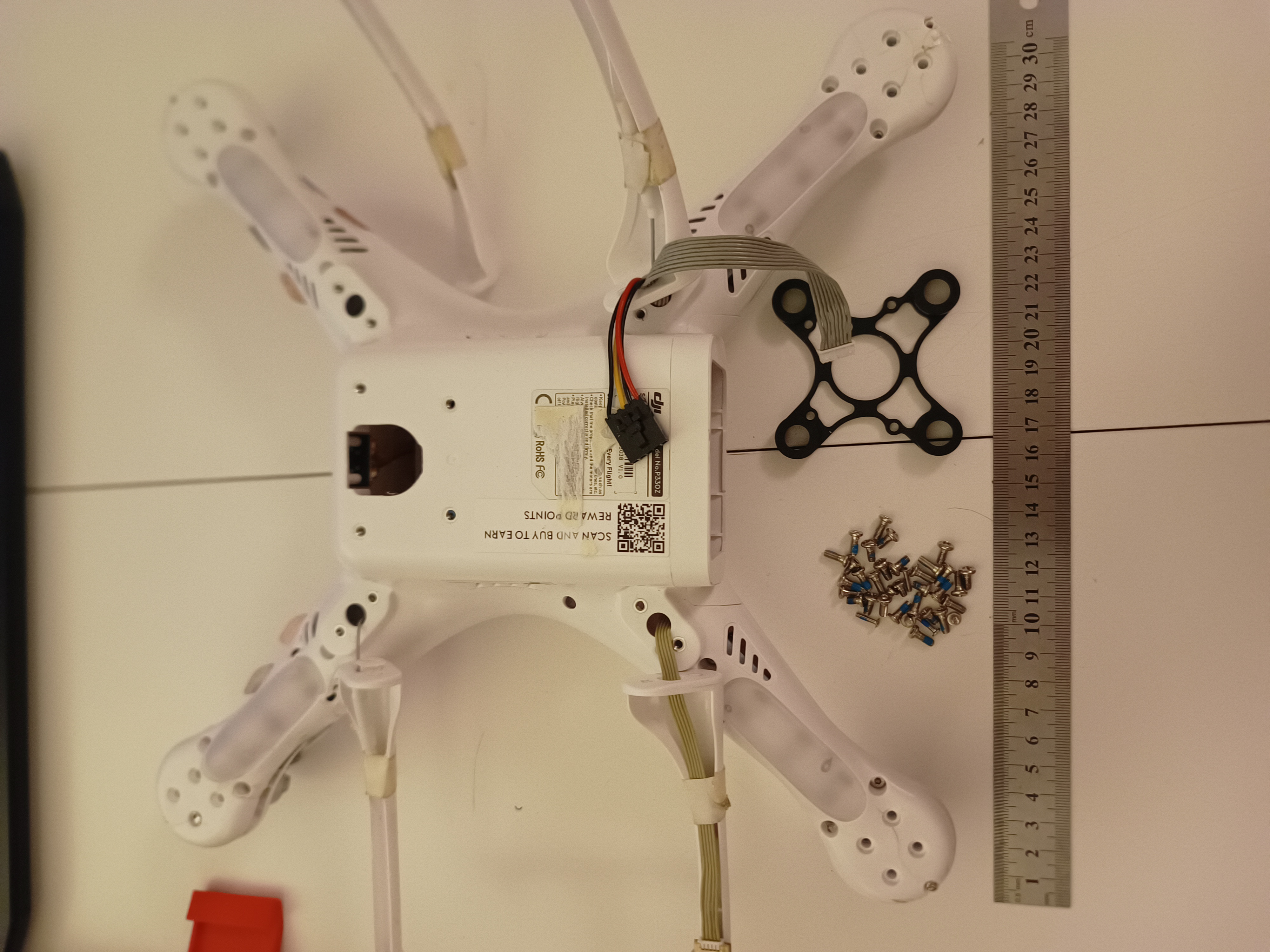
Unit #2 represents a significant scale-up from Unit #1 (108g → 1,387g). The DJI Phantom 2 is a prosumer-grade quadcopter with substantially more complex construction: integrated gimbal system, GPS module, multi-cell LiPo battery, brushless motors with ESCs, and a magnesium/plastic composite airframe.
This teardown tests whether our methodology scales to heavier, more complex assemblies.
Process
37 photographs document the complete process. Key stages:
- Intact documentation — all angles, serial numbers, condition assessment
- Gimbal removal — H3-3D Zenmuse unit, 4x screws + ribbon cable
- Battery extraction — 5,200mAh 3S LiPo (183g)
- Shell separation — top/bottom body, 8x screws (mix of Phillips and hex)
- GPS/compass module — mounted on mast, 2x connectors
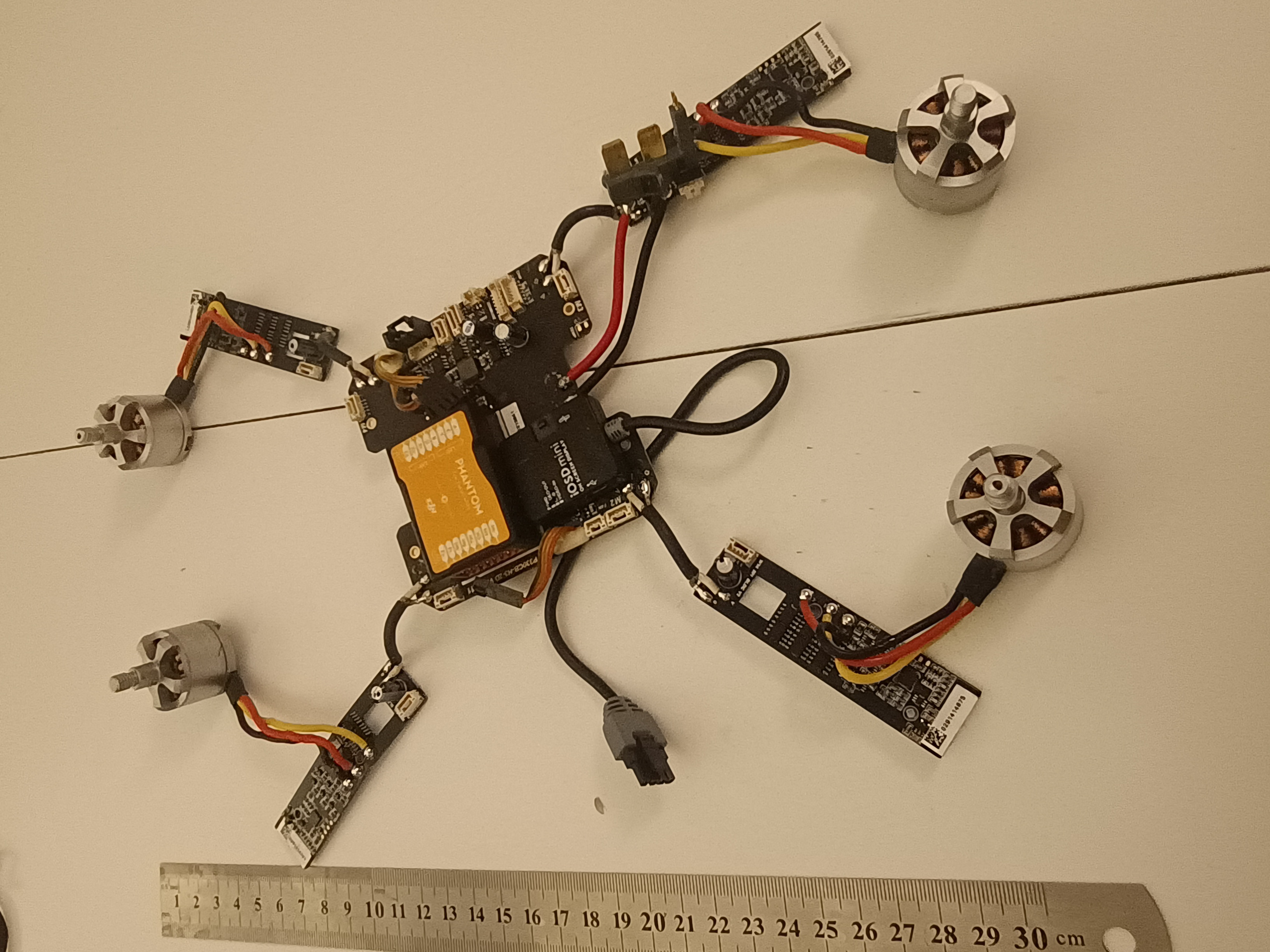
- Main board extraction — flight controller + power distribution
- Motor removal — 4x brushless DC, threaded mount, connector-based wiring
- Gimbal disassembly — 3-axis brushless motors, IMU board, carbon fiber plate
- Landing gear extraction — press-fit plastic with foam dampeners
- Frame disassembly — main body/arm separation
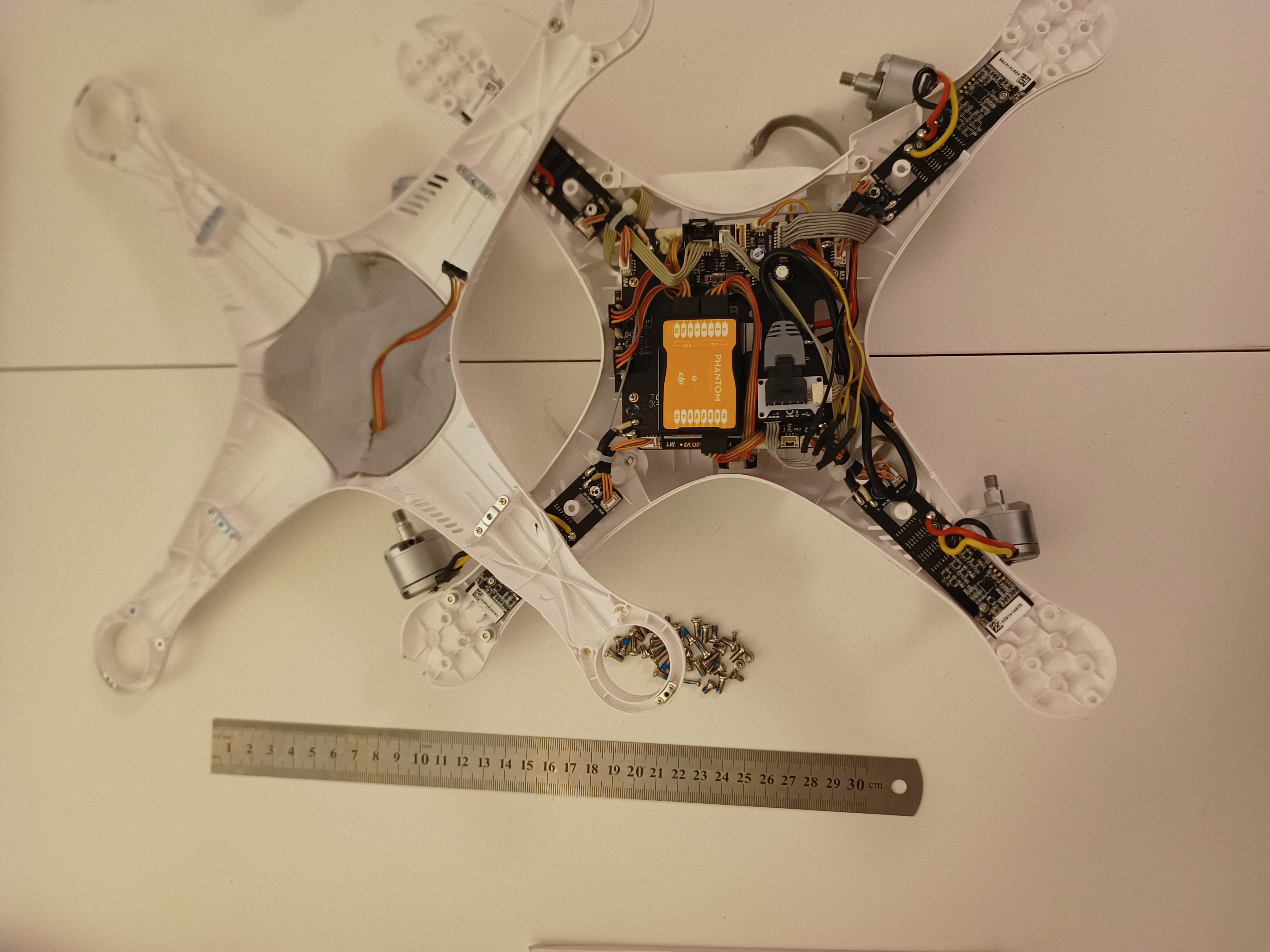
Unresolved: 307g integrated assembly (flight controller + ESC board + motor mount) with soldered connections too robust for current equipment. Requires 60W+ soldering station (~200-300 PLN) for complete separation.
Material Classification
| Category | Mass (g) | Percentage |
|---|---|---|
| Electronics (FC, ESC, GPS, camera) | 412 | 29.7% |
| Motors (4x brushless + 3x gimbal) | 238 | 17.2% |
| Structural (plastic/magnesium frame) | 296 | 21.3% |
| Battery (3S LiPo) | 183 | 13.2% |
| Gimbal assembly (carbon fiber, aluminum) | 142 | 10.2% |
| Wiring & connectors | 62 | 4.5% |
| Propellers & guards | 34 | 2.5% |
| Fasteners (screws, nuts) | 12 | 0.9% |
| Waste (labels, foam, adhesive) | 8 | 0.6% |
Parts-to-scrap ratio: 99/1 — confirming the pattern from Unit #1 at 12.8x the mass.
Key Findings
- Methodology scales — the systematic top-down approach works at 10x+ mass
- Tool requirements increase with scale — hex drivers needed, soldering station needed for full separation
- Composite materials appear — carbon fiber gimbal plate, magnesium frame elements. Directly relevant to future aircraft composites (validates PRz research partnership scope)
- Documentation standardized — naming convention
LL-PTR-002_NN_description.jpgestablished for all future teardowns - Assembly complexity creates natural stopping points — the 307g integrated module demonstrates that full disassembly may not always be practical or necessary
Comparison with Unit #1
| Metric | Unit #1 (E99 Pro) | Unit #2 (Phantom 2) |
|---|---|---|
| Mass | 108g | 1,387g |
| Components recovered | 24 | 47+ |
| Photos taken | 12 | 37 |
| Tools required | 2 (screwdriver, tweezers) | 5+ (screwdrivers, hex, pliers, tweezers) |
| Specialized equipment needed | No | Yes (soldering station) |
| Parts/scrap ratio | 99/1 | 99/1 |
| Composite materials | No | Yes (carbon fiber, magnesium) |